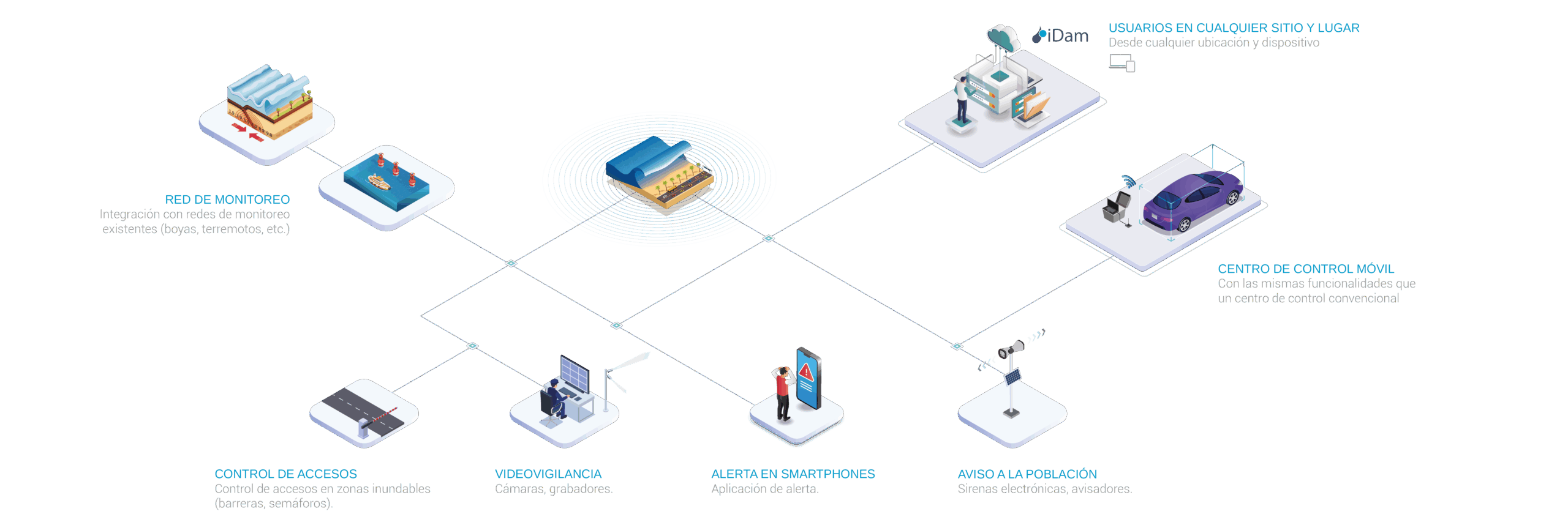
Integration with:
- Tide gauge sensors and level buoys
- Seismological stations and coastal accelerometers
- Continuous transmission: IP, radio and satellite



Coastal siren networks, tide gauge sensors and redundant communications controlled from COMSIR, compliant with UNESCO-IOC and the CAP protocol and integrated with national Civil Protection bodies.
We design and deploy complete detection, activation and audible public warning systems for coastal authorities, Civil Protection bodies and critical infrastructure operators exposed to tsunamis and marine seismic events.
Technical diagram of the integrated coastal detection, automatic activation and audible public warning system for tsunamis.
High-power omnidirectional output with multilingual voice messages. Rugged marine design with remote or automatic activation.
Local, remote or automatic activation. Fixed and mobile units with solar power and encrypted communication.
Web SCADA for remote control and supervision of the coastal network. API integration.
Tide gauges, seismometers and weather stations with real-time transmission over IP, radio, mobile network or VSAT.
Over 20 years deploying systems in areas where an effective alarm makes all the difference. In-house siren manufacturing, our own software and full technical support: from preliminary design to operational maintenance.
Technology active in coastal networks in Spain, Chile and Peru, working with national emergency management agencies.
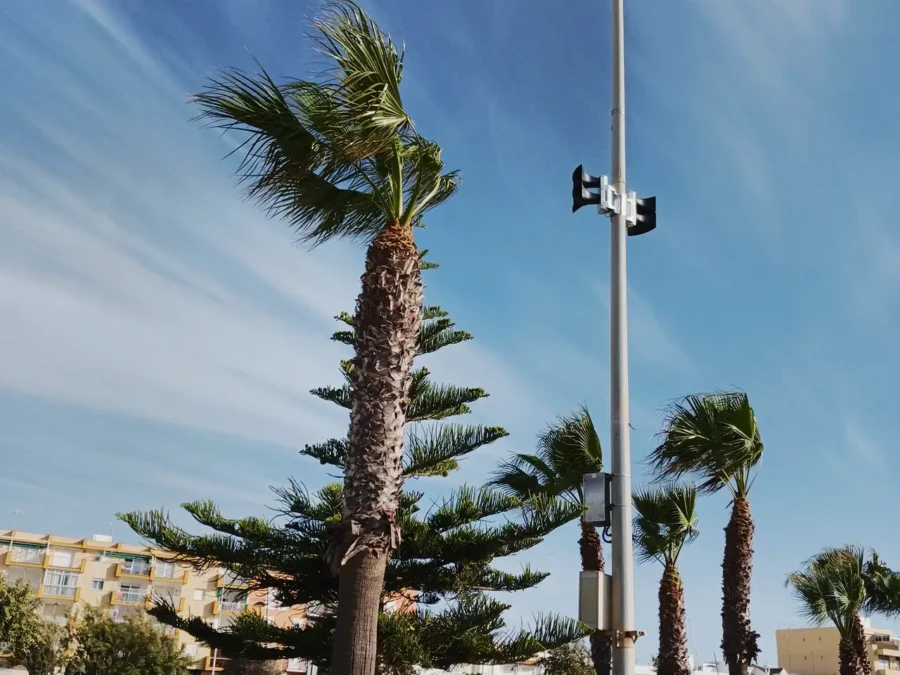
4 electronic sirens integrated with the municipal CECOP and 112 Andalusia via RESTful API. A UNESCO Tsunami Ready municipality. Validated in the provincial drill of November 2025.
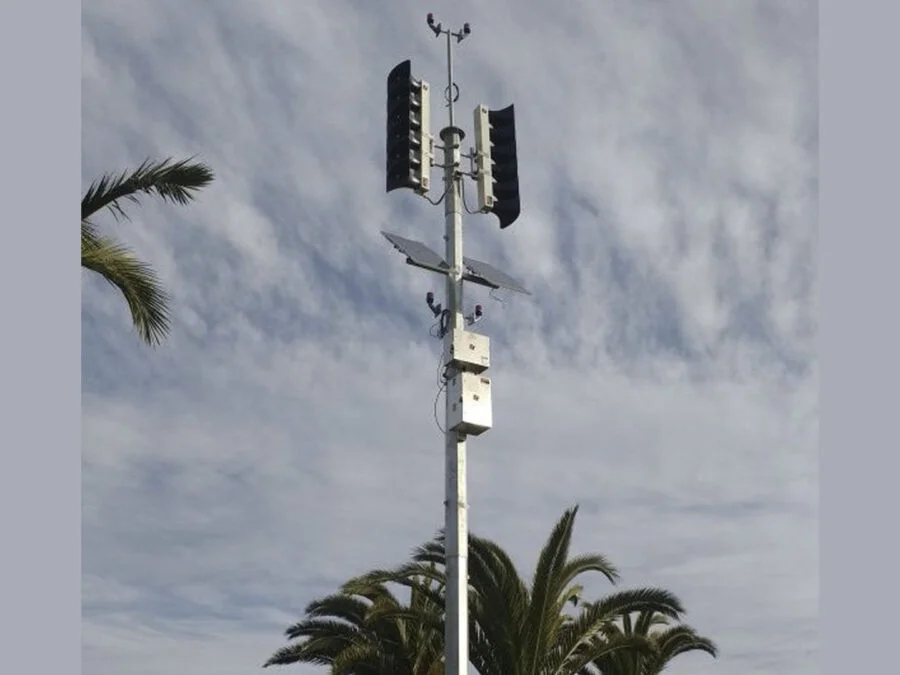
High-power electronic sirens in 5 coastal regions with integrated cameras and weather stations. Lafcarr is also bidding in the tender for the national 1,029-siren system coordinated by SENAPRED (2026).

Earthquake and Tsunami Monitoring and Alarm System deployed at a top-tier critical airport, in an area of high seismic and coastal risk in the South Pacific.
We answer the questions most often raised by coastal authorities, Civil Protection bodies, engineering firms and infrastructure operators at the design or tender stage.
Yes. COMSIR includes native RESTful API connectors for integration with 112, ES-Alert, SENAPRED, SHOA and other emergency coordination centres. The systems deployed in Chile are integrated with ONEMI and SHOA through standard protocols (OPC, IEC-104, MODBUS), ensuring full interoperability with national tsunami management platforms.
The system runs on redundant parallel communications: PMR/DMR radio, mobile network and VSAT. Losing one medium does not stop commands being sent. Each coastal node has solar power with backup batteries and at least 72 hours of autonomy without any external power source, ensuring operation even during a total blackout.
The system is designed to activate the entire siren network in under 10 seconds from the automatic validation of the event in COMSIR. This includes receiving the sensor signal, automatic threshold evaluation and sending the activation command to every coastal node at the same time.
Yes. The architecture is built to grow: a municipal pilot can expand into a regional or national coastal network without changing the base architecture. Every new node joins the same control centre and traceability framework. The national system Lafcarr proposes for Chile follows this principle with 1,029 sirens across the country's 16 regions.
The system includes standardised automatic test protocols: periodic checks of communications and equipment status, and full activation drills. All tests are logged with a checklist, records and evidence in COMSIR/iDam, available for official audits or UNESCO Tsunami Ready certification.
We work with coastal authorities, Civil Protection bodies and critical infrastructure operators to design and deploy complete solutions: from the preliminary technical design to commissioning, regulatory integration and operational maintenance.
Every situation needs a system tailored to the
risk, the environment and the regulations. Tell us about your
case: we'll design a functional,
scalable and fully compliant solution.