Drills

📢 Siren test drill at Llosa del Cavall – 22 October – Dam Emergency Plan (PEP)


Official sound tests of the La Llosa del Cavall public warning system

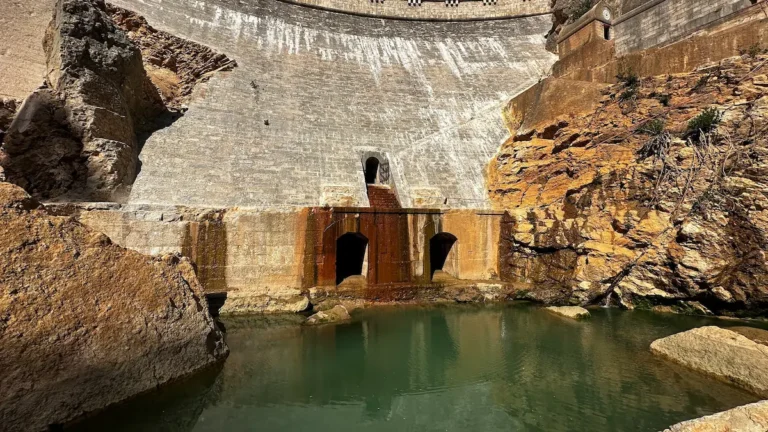
On Wednesday 22 October, between 10:00 and 14:00, a siren drill of the public warning system at the La Llosa del Cavall dam (Solsonès) will take place.
The exercise is part of the Dam Emergency Plan (PEP) and will validate siren coverage and audibility, management tests with the iDAM software and operating procedures with local councils and Civil Protection.
The work was carried out in a joint venture with Construccions Cardoner.

During the test, the six sirens in the following municipalities will sound:

  • Clariana de Cardener

  • Olius

  • Navès

  • Lladurs

Drill objectives

  • Verify the actual acoustic coverage of the 6 sirens in the affected areas.
  • Certify sound levels with meters at set checkpoints.
  • Test iDAM remote control and communication redundancy with the ACA control centre in Barcelona

Practical information for the public during the drill

  • The exercise does not involve any real evacuations.
  • Audible signals marking the start and end of the alert will be sounded, along with information messages.
  • If you hear the sirens, don't be alarmed: it is a scheduled test to improve safety.
  • Take the opportunity to get to know the signals and the official advice.
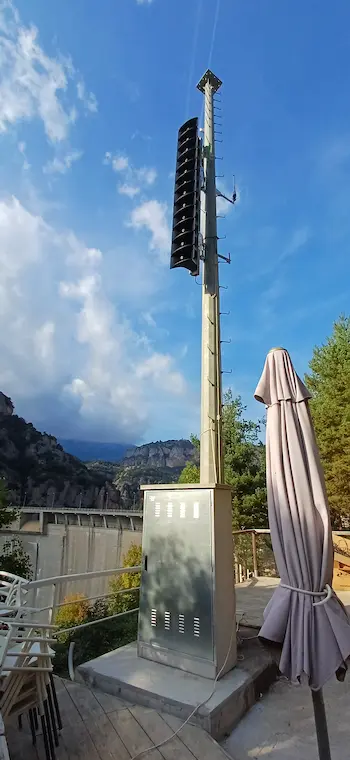
Electronic siren installed at the La Llosa del Cavall dam as part of the public warning system integrated with iDAM (ACA).

Official PEP leaflet – La Llosa del Cavall dam (ACA)

Download / open PDF

Your browser cannot display embedded PDFs. You can open or download the file here.

Approximate size: 570 KB · Source: Catalan Water Agency (ACA)

Dam Emergency Plan (PEP)

Siren drill at the La Llosa del Cavall dam (Solsonès): public warning system integrated with iDAM

Self-protection measures in a real dam failure or flood

Follow this official advice immediately if a dam fails or anything else happens that could cause flash flooding. Getting to higher ground, keeping away from the river and following the authorities' instructions are your priorities.

Immediate actions

  • Move quickly away from rivers and streams.
  • Head for higher ground and stay there until the all-clear signal.
  • Do not cross rivers or streams; the current can sweep you away.
  • Avoid roads in flood-prone areas; they may be cut off and leave you trapped.
  • Do not go to collect children from school; staff will follow the protection protocol.
  • Follow official instructions from Civil Protection/112 and your local council.
  • Stay informed through official channels and media.
  • Only use the phone if you really need to; keep emergency lines free.

If you are at home and need to evacuate

  • Lock up your home and, if it is safe, turn off the electricity and gas.
  • Take essentials only: documents, money, medication and a small emergency kit.
  • Don't forget your pets: take them with you along with basic supplies.
  • Go to the meeting point set by the emergency services or to safe high ground.
Self-protection advice for the Foix dam drill with Lafcarr sirens

Upcoming work and drills (dam failure / flood)

Operational information for municipalities and technical services. Times are local time.

La Llosa

22 October 10:00–14:00

Darnius–Boadella

12 November 10:00–14:00

La Baells

17 December 10:00–14:00

Note: times and areas may change for operational reasons and on-site validation.

Official dam siren signals

These are the standard audible signals used in a dam failure or flood. Get to know how they sound and what they mean.

Start of alert (evacuation)

Start-of-alert signal chart: three one-minute sirens with 5-second pauses

Three one-minute signals separated by 5-second pauses. The sound starts with a rising tone and holds steady at a high pitch. It means you must move away from the river and head for higher ground.

End of alert

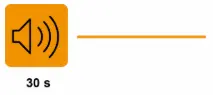
End-of-alert signal chart: a single continuous 30-second tone

A single continuous 30-second tone. It confirms that the situation is over or that the exercise has ended. You can carefully resume your activities while staying informed.

FAQs: what to do in a real emergency

What exactly does the alert signal mean?
It marks the start of an event in which you should follow this advice: move away from the river, get to higher ground and follow official instructions. During the drill, it is a rehearsal so people become familiar with the signal.
And the end-of-alert signal?
It confirms that the situation is over or that the exercise has ended. Carefully resume your activities and watch for further official instructions.
Will I get a mobile alert as well as the sirens?
Sirens can be combined with ES-Alert, the cell broadcast system that sends warnings to phones in the affected area. It depends on how the authorities set up each operation.
Should I collect my children from school when the sirens sound?
No. Schools have specific protocols and staff are trained to apply them in an orderly, effective way. You will avoid blocking access routes and roads.
What should I do if I am in or near the riverbed when it starts to sound?
Move away immediately and get to higher ground by the shortest route. Avoid bridges, fords and tunnels. Do not cross flowing water.
What if I can't hear the siren inside a building?
Close windows, go to upper floors and follow official channels. Sirens may not be audible indoors everywhere, which is why there are additional channels such as ES-Alert and official announcements.
Can I use my car to leave?
Only if strictly necessary and along safe routes to higher ground. Never drive through flooded areas or moving water.
Who should I call to check whether it is a drill or a real emergency?
Check the official 112/Civil Protection and council channels. Only call 112 for real emergencies so as not to overload it.
What should I do about elderly people or those with reduced mobility?
Make getting them to higher ground safely the priority. If they need help, coordinate with neighbours and council services. Keep medication and essential documents to hand.
What should I do with my pets?
If possible, take them with you to high ground. If not, do not go back into danger zones for them while the alert lasts. Follow council instructions.

Want to take your dam's safety to the next level?

At Lafcarr we design, manufacture and integrate public warning systems combining electronic sirens, sensors and iDAM software to ensure reliability in emergencies and compliance with emergency plans (PEP).

If you are responsible for a dam, civil protection or emergencies, request a tailored iDAM demo or talk to our technical team about optimising your emergency plan.

Request an iDAM demo or technical advice
Lafcarr

Does your infrastructure need protecting?

We design early warning and monitoring systems tailored to every environment. Tell us about your case.

Talk to an engineer

    At Lafcarr we make critical environments safer.

    Do you need a warning system, iDAM monitoring or an emergency plan?
    Fill in this form and our technical team will get back to you within 48 working hours.